The AAA Industry and Modding Tools
⏲ 14 min
Please note that I'm not a AAA game developer and this is based on my own observations. When referring "AAA game developers and studios", I mean their public stance or combination of behaviors, not individual employees within these studios.
A few days ago, I fired up an Unreal Engine 2 game. I didn't made a direct shortcut to the executable (being lazy is really hard these days), so I had to dig through the game files and launch it manually. While scrolling and clicking too fast, I accidentally launched UnrealEd 3.0.
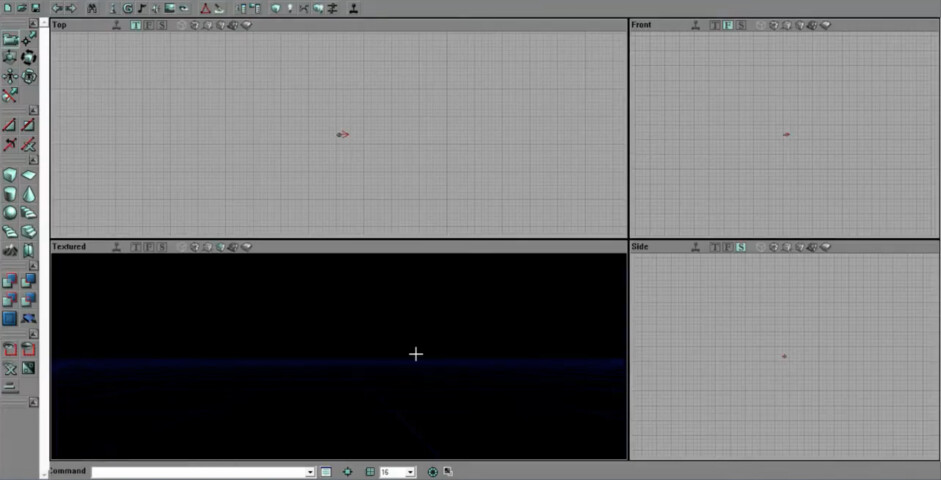
UnrealEd 3.0 Editor with a empty scene - Epic Games 2003
Damn, I nearly forgot about that chunky wxWidget app.
Just before closing the app, I asked myself "Do the big studios provide these kinds of tools anymore?". Mods still exist, sure, go to Nexus Mods or ModDB to see a fraction of what game modding can offer. But many of these modifications aren't supported by the game natively and the modifications aren't made using exactly what the game developers used to make the game.
Let's rewind a bit. In 1983, Lode Runner was released. It's a puzzle-platformer, nothing fancy compared for today games. You have to collect all the gold in a blocky 2D level full of enemies and get out. What's interesting there? The gameplay? The graphics? The maps?
Not really, in our case, it was one of the first games featuring a level editor. While we experimented with byte-level editing, the game's editor made it easier to create custom levels. Fast-forward to 1993: Doom was released. Nothing fancy, just one of the biggest games of its time. What's interesting in our case is that John Carmack separated the assets from the game. Fans began building custom editors and hacks for the game and most importantly, did so without sharing the game executable and WAD. Modding exploded after the source code was released later in 1997.
Released in 1996, Quake was the first big game to allow gameplay modifications. It embedded a bytecode virtual machine with an external script compiler, QuakeC, which gave players greater modding freedom (Team-Fortress is classic example, pun intended).
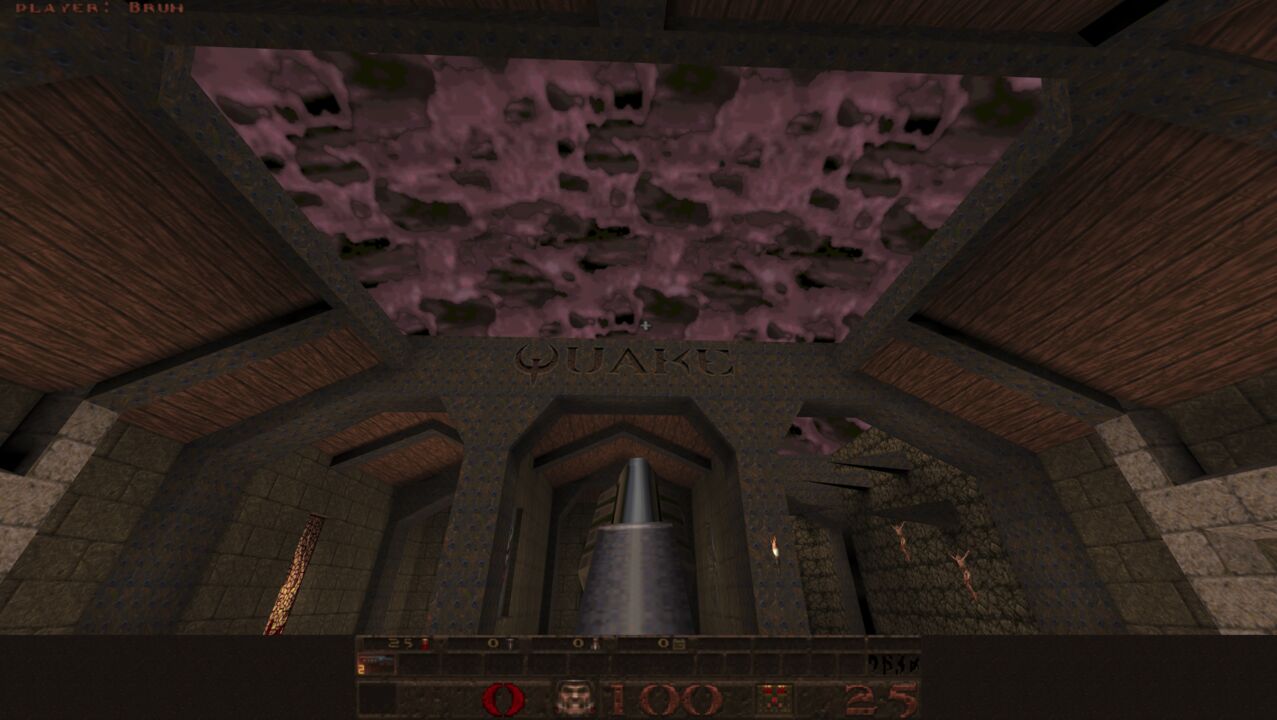
Quake - Level Selection Map - Id Software 1996
A small company named Valve Software released Half-Life, a direct descendant of the Quake and Quake 2 engine. It expanded the game SDK concept by releasing a mapping SDK in 1999, one year after its release. The SDK included model conversion tools, mapping tools, the very-stable Hammer level editor, some map sources and a few 3D Studio Max models from the game. If you wanted more, you could ask Valve (after signing an NDA unfortunately) for nearly the full game source code. The code for non-commercial use was released later in 2002 for everyone. In the same year Half-Life launched, Epic released Unreal. It shipped with UnrealEd 1 with the game's official toolkit: a level editor, model and texture viewer with an embedded scripting environment powered by Java-like UnrealScript.
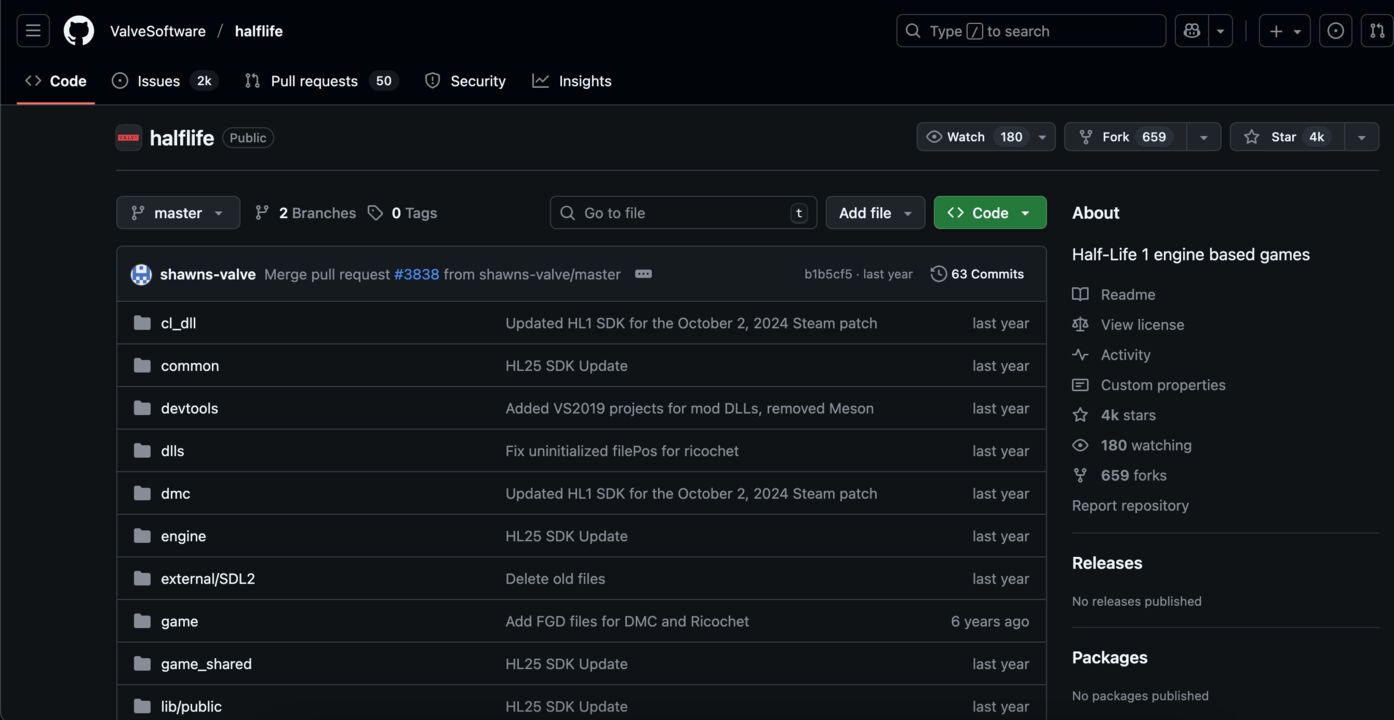
Game developers took notes of the modding aspect of the game and started to add modding support baked in their games: Battlefield 1942, Half-Life 2, Max Payne 1 and 2, FarCry 1 and Serious Sam to name a few.
Then it began to slow down, it didn't disappear, no, but it became less and less common. It wasn't a day-one feature on the box, but something like an add-on.
What happened ? Why are tools for current-gen titles rarely shipped with them anymore ?
In my view, the industry shifted as game engines grew increasingly complex and consoles and mobile platforms became a top priority.
Let's start with the most oblivious one, the middlewares. A middleware is in simple terms a simple extensions that could be integrated inside games and game engines. They simplify and sped up the developpement process. Havok, FaceFX, WWise, Umbra to name a few. Most of these forbid the redistribution of tools, headers and static libraries without permission. If you want to add facial animation or tweak one of these features more deeply, you're out of luck if the engine doesn't expose these features via scripting or custom tools.
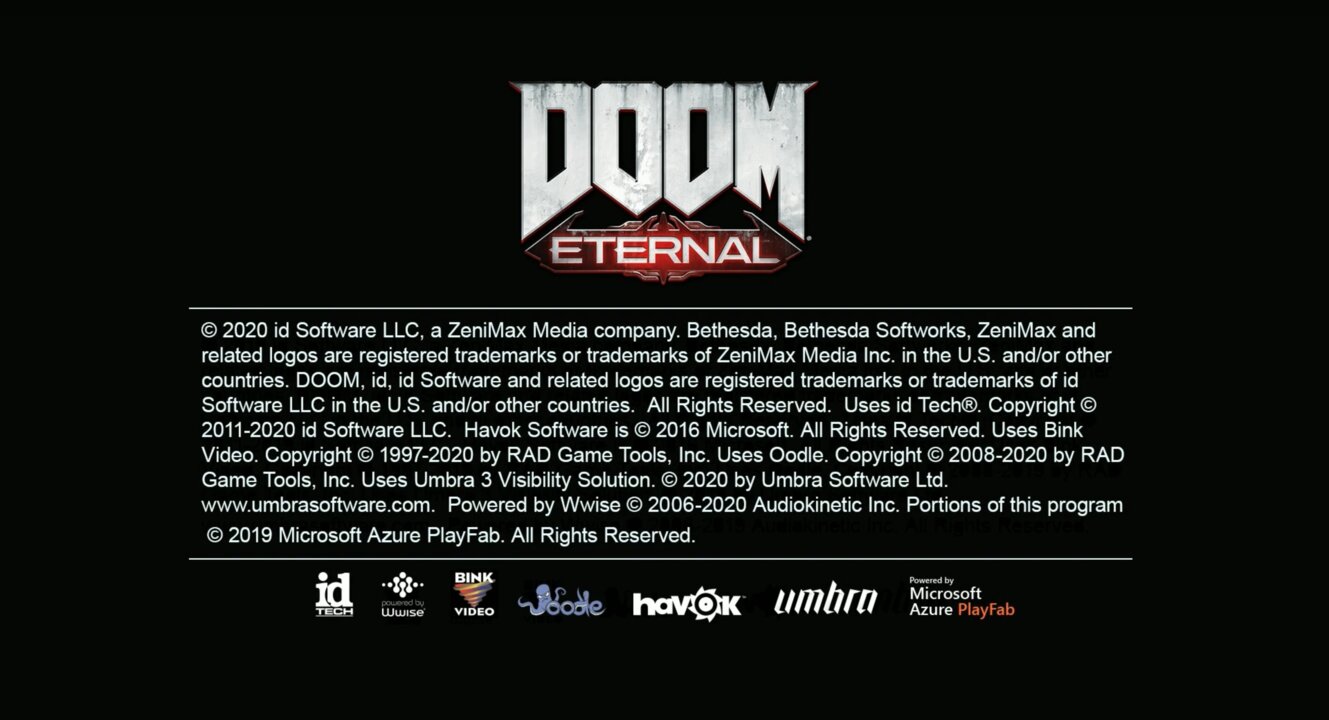
Did you checked once what these logo meant ? - Doom Eternal, Zenimax / Id Software 2020
To go even further, IP protection hits the hardest. Game developers are afraid to expose anything that could help somehow the competition. Innovation slowed down, we're no longer in the early 2000s, when rapid improvements arrived every two or three months-ish. If a studio wants to ship a powerful external editor and SDK, assuming they expose only what was developed in-house, it has to scrub, redact, stub or cripple everything it can to be license compilant. They could release a basic editor like Doom (2016)'s SnapMap but they're really limited.
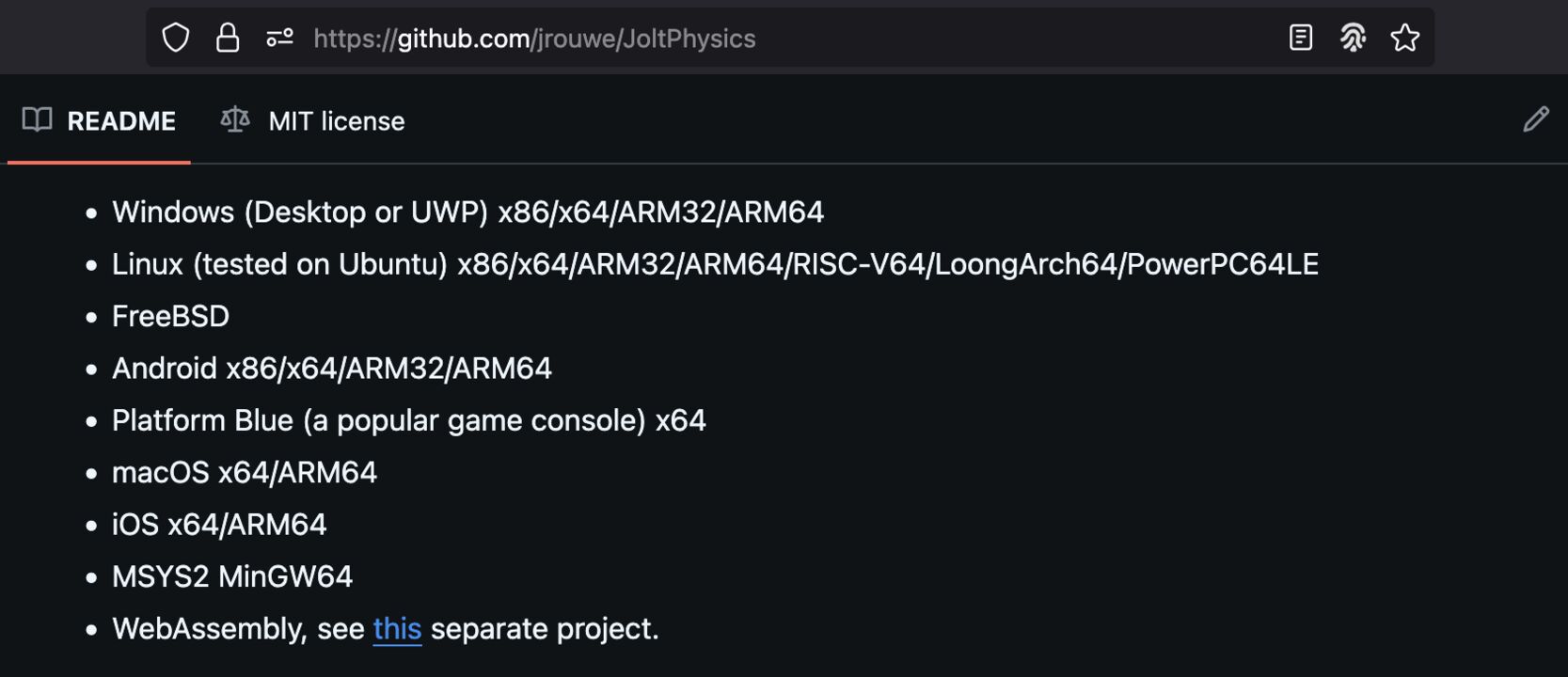
Another point is that the tools are getting bigger and bigger. Not just a few megabytes, but gigabytes bigger. The editor is no longer a 5 Mb executable made with WinForms. It's a complete, suite of tools: from the level editor, to the lightmapper, animation, cinematic tools to multiple connectors to other expensive software which cost a car. It's now a behemoth that needs at least 32 GB of RAM to open a blank scene. Take Unreal from 1998 for example, UnrealEd 1 was a editor written in Visual Basic with a embedded level preview and .UNR files with the associated precompiled UnrealScript files. The game can then read them. Nowadays, you can play literally the game inside the editor.
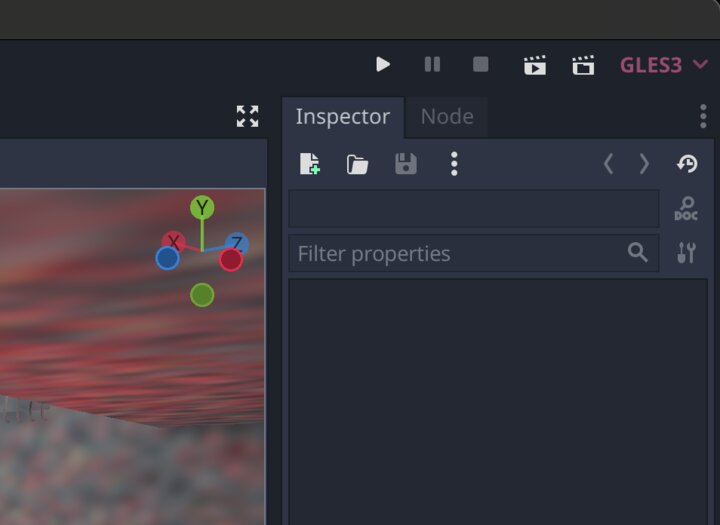
The "Play" button inside the editor - Godot Engine
Even if the studios cleared out all of these issues, what then? Do you just export an archive and upload it to your website as is? If your game is dead and will no longer be maintained with a prominent disclaimer asking users not to request support, ""maybe"". If that's not the case, it must be kept up to date alongside the supported game. What does this mean? You need developers, writers, quality assurance, legal time and some degree of community management. This is a non-negligible expense, especially if the game isn't based on player-generated content.
For some studios, the PC is already an afterthought, as most of the industry focuses on console versions of their games. Some developers don't have time to implement proper mouse support, FOV sliders or graphical tweaks. A public, complete, legally clear and well documented SDK unfortunately falls in priority somewhere between "ultrawide support" and "Linux support". Console manufacturers forbid external resource sideloading at all, so any editor release would be PC only (Super Mario Maker if you consider somehow as a SDK).
In my opinion, the democratization of hobbyist-level game engines, such as Unity, Unreal 4+, Godot and GameMaker 2 may have slowed things down. Paradoxically, it reduced the pressure on AAA studios to provide tools. Why bother releasing custom content support when an aspiring developer can make their own game? The 15 year old who in 2000, would have spent two months making the best CS bunny hop map can now build a bunny hop simulator in Unity and release it on Steam in the same time span.
Mods should and will never die. Some games are litteraly based around the concept of mods and user generated content like Roblox, Garry's Mod or S&Box to name just a few. Players still want for mod support for their favorite game. Cyberpunk 2077 launched without any modding support whatsoever. Players had to reverse engineer the REDEngine to hook, inject code and scripts that may get broken at every update of the game. The madlads did it. Why you may ask ? Personalization, add more content or fixing a game's quirk (Bethesda Softworks, anyone, no?).
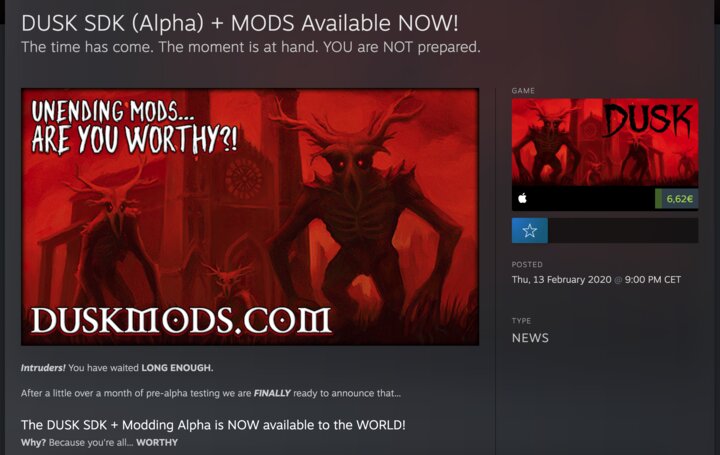
Indies understood this. When David Szymanski announced that Dusk would get a level SDK, players were on board. When Teardown shipped the Voxel Editor, you can bet that players made a Blue Hedgehog®, more levels and a spooky skeleton on wheels. I could talk about Ready-or-Not or Minecraft, but you get the point I believe.
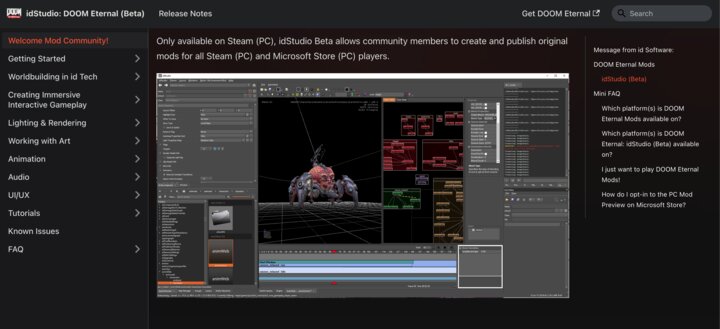
Not all hope is lost, I think. Some AAA studios surely know this, but it's the exception, not the rule unlike a few decades ago. Id Software released a version of its idStudio suite for Doom Eternal, Battlefield 6 appears to support a custom version of the Godot engine for creating custom levels and Bethesda Softworks still releases the Creation Engine Toolkit. What some of these companies don't understand is that if you trust your players, they may repay you with immortality. Players still make Doom mods and total conversions (with enhanced engines !), newer games still ship with custom Quake engines and so on and so forth. Releasing source code may be impossible now, I get it, but I believe the minimum should be done to natively support user-created content by providing tools where possible.
Counter-Strike was a Half-Life mod, Killing Floor was an Unreal Tournament 2004 mod and PUBG was an Arma mod. Entire games and genres were born from other studios toolboxes and players haven't forgotten where the originals were from.
So here we are, the tools get bigger and more inaccessible for everyone modding, platforms get more locked down and modding support is seen as a quirky expense. Perfect! I just hope this doesn't get any worse...
I don't rant because I remember like "Pepperidge Farms remember" meme. I rant because I fear the future will be smaller, sterile and a lot more less interesting than the past. If you read my previous posts, you see what I mean.
See you next time.